
"One woman for another, that's how change is going to come": Interview with Punam Thapa
What can caregivers do to empower girls as they grow?
Always listen. Without judgement or presumptions, just listen to what she has to say. At any age and any stage of her life, be it the time she is menstruating, she needs career counseling, she wants to talk about her boyfriend, she accidentally gets pregnant. Hearing her out is one thing that will solve half of the problems. I have always felt this way with my older brother. We came to the SOS Children’s Village in Surkhet together and, luckily, we were in the same family home. In my happiness, in my weak points, he has been the one who pushed me and never let me down. I am very privileged because there are people out there who have literally no one to talk to.
I don’t believe in big solutions to problems like gender inequality. It is the small things that will make a big difference. If I get supported by my family and another woman by hers, this is how our country will progress. The solution is actually not that tough – you just have to start with your sister, daughter, mother or wife. Be there for her when she is vulnerable or hurting. Take a stand for her when she needs it. This is how development works.
What do young women with care experience need?
When we transition from SOS Children’s Villages to youth care facilities or move to bigger cities or abroad, these are the crucial times when we need career counseling and emotional support. There will be times when we will need suggestions or doubt our capabilities. Our guardians should talk to us about what we can expect. Our families should appreciate us, motivate us, tell us that we are doing a good job time and again. Nothing is greater than family in this world.
What are the threats to young women's mental health?
“Being a woman, why do you have to party late at night? Being a woman, why do you go with a man? Being a woman, why do you lose your virginity before marriage?” These are sentences often repeated in our society. Girls are judged differently than boys for the same things, and it affects their mental health. They are always suppressed and never a priority. They receive this stimulus from society from an early age and it gets in their heads. What’s more, there is a difference in the quality of healthcare females receive, even when they suffer from the same physical or mental diseases as men. “Being a woman, why does she need treatment?”
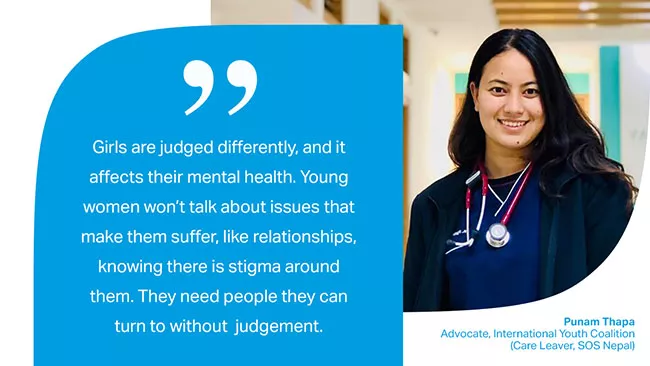
Mental illness is still taboo in Nepal and around the world. But, in reality, physical and mental health always go along. Talking about mental health is a step towards normalizing it. I really want young people to open up about their problems, but if we don’t initiate these conversations, it is not going to happen. Young women won’t talk about issues that make them suffer, like relationships and sexuality, knowing that there is a social stigma around them. They need to feel that they have people they can turn to without being judged.
What message do you have for young women about their careers?
Start from you. Always be there to defy social standards if they are not right. Take a stand for yourself. Have a vision of what you really want in life. It doesn’t have to be about money or success but about being a good, kind, happy human. We should aspire to be better humans every single day. We should be growing kinder day by day because this is what our world needs right now. We might not affect many people, but at least we will affect our lives and our families.
Kudos to all the women who are trying. One woman for another – that’s how change is going to come.