Rwanda’s green future begins in the classroom
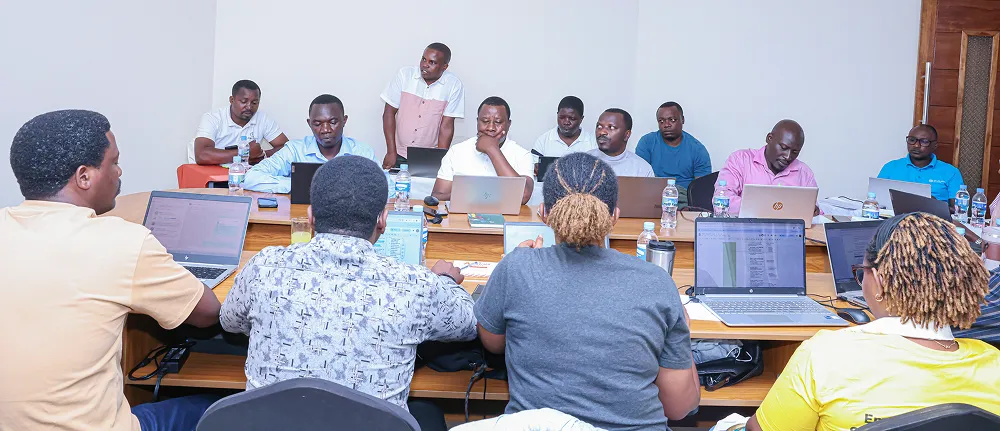
SOS Children’s Villages Rwanda, in partnership with the Technical and Vocational Education and Training (TVET) Board, has launched a four-day orientation workshop to integrate green growth concepts into training curricula and program implementation.
Through the Green Growth: Empowering Youth for a Green Future (Green Growth) project, the workshop brought together 13 specialists, led by Aimable Rwamasirabo, Head of Department for Curriculum and Instructional Material Development at the Rwanda TVET Board (RTB), alongside 10 project staff from SOS Children’s Villages Rwanda.
The workshop aims to strengthen Rwanda’s TVET system to deliver quality, inclusive and relevant labour market green skills training aligned with the country’s national green growth priorities.
Participants focused on:
- Strengthening understanding of green growth concepts and their integration into TVET curricula and program implementation.
- Assessing gaps in TVET delivery, including curricula, trainer competencies, equipment, infrastructure and industry linkages related to sustainability.
- Identifying suitable TVET institutions based on readiness, geographic coverage and alignment with emerging green growth opportunities.
- Developing a roadmap for curriculum review and providing technical and material support to selected partner TVET institutions.
We want to identify where efforts are most needed within the national curriculum so that young people receive comprehensive support during the implementation process,” said Octave Shyaka, Green Growth Project Manager at SOS Children’s Villages Rwanda.
Shyaka noted that sectors such as green mobility, agriculture and renewable energy have already shown strong potential.
The world is moving towards green solutions, and we want young people to move with it. Many young people, including those with disabilities, still struggle to access decent opportunities in the labour market. Through our collaboration with the RTB, we want to open pathways that empower them to build sustainable futures.”
Vedaste Cyiza, a water and irrigation trades specialist, highlights that agriculture is a sector capable of transforming young people’s livelihoods.
Agriculture is one of the sectors young people should be interested in because it does not require large amounts of capital to begin. What is important is equipping them with knowledge in smart agriculture and green regeneration practices. Rwanda has favourable weather conditions that can make green agriculture highly productive
Ishimwe Simon Pierre, a construction and building trade specialist, emphasized the importance of implementing green growth principles in Rwanda’s construction sector and expressed optimism about the potential positive future impact.
Green growth may still be new in Rwanda, but by equipping young people with green skills today, we are building a more sustainable construction sector and a stronger future for our country.
He added that further collaboration between RTB and SOS Children’s Villages Rwanda will be key to expanding green skills training across the country, enabling more young people to access opportunities in emerging sectors and contribute to Rwanda’s growing green economy.
Why your support matters
By combining skills development, internships and strong partnerships, the Green Growth project helps young people build real-world experience and access pathways to decent work.
Your support helps young people gain the skills and confidence they need to shape their futures and contribute to stronger communities. Every dollar you contribute is 3X matched, multiplying your impact and maximizing hope.
Green Growth is a five-year initiative launched in 2025 in partnership with the Government of Canada through Global Affairs Canada.