
Burkina Faso: Space for children to be children again
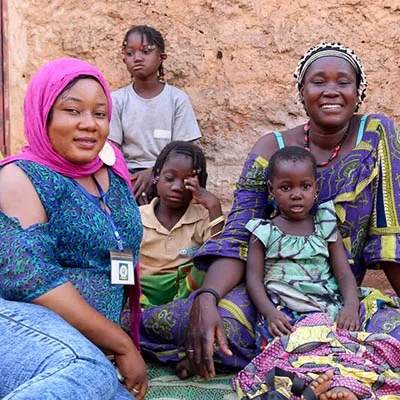
“Surviving is the hardest part now,” says Aisseta, as she admits how families are barely able to make ends meet with the little aid distributed on-site by humanitarian aid organizations. “I sleep in a narrow room with eight of my children and sometimes find it hard to sleep."
In order to earn a few pennies to survive, her two eldest children work at a gold mine a few miles away from Kaya, descending into deep holes in the hope of finding the precious ore. In these parts, mines are not officially regulated by the state. Moreover, working conditions are extremely difficult, and safety measures are non-existent.
Beyond this hardship, another issue is less visible but just as devastating.
“Most families and children we support in Kaya have been traumatized by the extreme violence they have experienced or witnessed,” says Robert Sawadogo, who works as an SOS Children’s Villages Social Worker in Kaya.
“Some children have been separated from their parents or brothers and sisters. They have lost hope, so it’s indispensable for them to have a way to evacuate the distress and fear so they can experience what being a child should be like—by playing, learning and feeling safe to be themselves again."
Since 2020, SOS Children’s Villages in Burkina Faso has set up a number of Temporary Learning Spaces (TLS) to help ease the suffering of displaced and host communities.
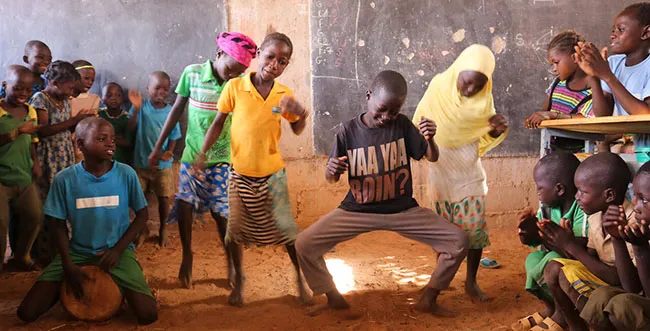
“Four of my children attend the SOS Temporary Learning Space every day. The joy that emanates from them when they come home brings me hope,” says Aisseta, looking at her children sitting by her side. “When they come home, they are always happy to show me the dance, song or game they’ve learned. They also come back home with their stomachs full.”
“The activities we do here with children are meant to help them evacuate and process the stress or trauma they’ve been through. Children who used to be shy and uncommunicative when first joining are now a lot more open. They're able to let go and begin to feel joy once again,” says Sawadogo.
Waving her hand towards Aisseta from a distance is 8-year-old Faoussia.* She is friends with several of Aisseta’s children and attends SOS Children’s Villages’ temporary learning space. Every morning she walks over one mile to go to the TLS. Despite the distance, this does not deter her from going. Although she is still young, she knows how important school is. “I want to be a nurse,” she says.
The temporary school is not like any other normal school. Just like Aisseta’s children, Faoussia is in a multi-grade classroom, which means that children from different ages and school grades are part of the same class and have the same teacher throughout the day.
When Faoussia arrives, it is still pitch dark early and only a few children's silhouettes can be seen. Most children come by foot and arrive still half asleep. As more children arrive, the landscape changes with children playing tag, clapping their hands and singing around right until the school bell rings.
Children gather around their teacher and form ranks in front of a flag of Burkina Faso flying on a pole and start chanting the national anthem in unison.
It’s a new dawn. It’s a new day.
*Names changed to protect privacy