
Two years of bringing mental health support to children and families in Kharkiv, Ukraine
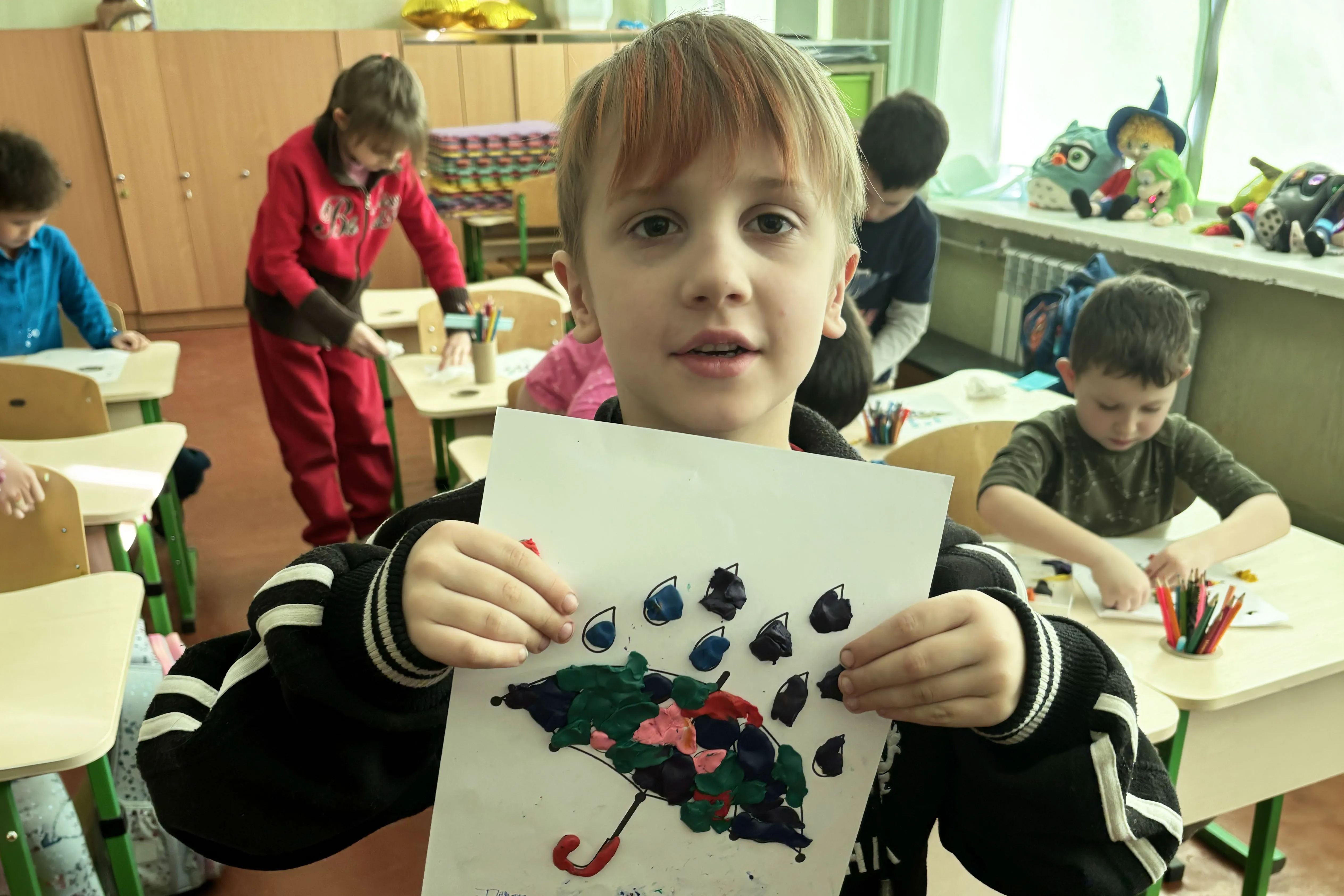
For children and families living through the war in Ukraine, the effects of conflict extend far beyond physical safety. Displacement, loss and the constant threat of attacks can have a profound impact on mental health and wellbeing. Children continue to live with air raids, shelling and disruption, with anxiety, fear and sadness remaining widespread.
For two years, an SOS Children’s Villages mobile mental health and psychosocial support (MHPSS) unit travelled across the Kharkiv region, bringing support directly to children and families affected by the war.
Launched in April 2024 with funding from the Canada-Ukraine Foundation and the Ukrainian Canadian Congress, the project reached displaced people, those living in recently de-occupied communities, and families who had returned home after displacement.
This Canadian-funded phase of the project ended in June 2026.
Our impact
Over the course of the project:
- 3,307 children, young people and adults received mental health and psychosocial support, exceeding the project target by 32%.
- 206 teachers, social workers and other professionals were trained in mental health and psychosocial support approaches and techniques.
- 4,673 people, 84% of them children and young people, benefited from the enhanced knowledge and skills of those trained.
- 1,808 people received emergency food or essential non-food items, exceeding the project target by 57%.
The mobile approach was particularly important for people who could not easily access services, including single parents with several children, grandparents caring for children, foster families, people with disabilities and families living in hard-to-reach communities.
Building back confidence after loss
Behind these numbers are children like Vitaly, a young boy from the Kharkiv region.
At the beginning of the war, Vitaly experienced profound loss. His family’s home was destroyed by shelling, and his grandmother died. After the family evacuated, he experienced heightened anxiety, difficulty sleeping, sensitivity to loud sounds and social withdrawal.
When Vitaly began receiving support from SOS Children’s Villages, psychologists first concentrated on creating a sense of safety and trust. Because he was reluctant to talk about what he had experienced, they used age-appropriate, play-based activities to help him express himself and engage with others.
Over time, Vitaly began finding it easier to connect with his feelings and build trust with his family and friends. He learned how to identify and express his emotions and recognize how his body responded to stress.
Psychologists also introduced practical coping strategies, including breathing and self-regulation techniques. Eventually, Vitaly began using these techniques on his own.
His progress demonstrates what sustained, child-centred mental health support can mean for children who have experienced the trauma of war.
Reaching families despite ongoing attacks
Providing support was not easy.
Throughout the project, the team worked in a volatile security environment. Intense shelling in Kharkiv and surrounding communities, frequent air raid alerts and the continuing threat of missile strikes interrupted activities and sometimes required staff and families to move to underground shelters.
Power and heating outages created additional challenges, particularly during winter. The mobile team continually adapted, finding safe locations and relocating or rescheduling sessions when necessary.
The project’s mobile model proved especially valuable under these conditions. Instead of expecting families to travel to services, psychologists and social workers could bring support closer to the communities that needed it.
Multiplying the impact
An important part of the project was ensuring its impact extended beyond the mobile team.
By training 206 teachers, social workers, and other professionals, the project strengthened their ability to support the mental health and psychosocial needs of people in their communities. In turn, 4,673 people benefited from their enhanced knowledge and skills, extending the project’s reach well beyond those who received direct support from the mobile team.
Emergency response in Ukraine continues
While Canadian funding for the mobile MHPSS project[MB1] [JA2] [JA3] [MB4] in Kharkiv ended in June 2026, SOS Children’s Villages Ukraine continues to support children and families affected by the war through its broader Emergency Response Program. As of February 2026:
- More than 600,000 people were supported through large-scale humanitarian assistance delivered in partnership with local organizations.
- 185,000 children and parents received psychological care to help them cope with stress, trauma and loss.
- 166,000 displaced children and families received relief supplies, counselling and psychosocial care.
- 965 children injured in the war and their families received medical, psychological and rehabilitative support.
- 120 child-friendly spaces provided thousands of children with places to play and learn, offering moments of safety and normalcy amid disruption.
- 9,000 Ukrainian refugees were supported by SOS Children’s Villages programs in eight European countries.
SOS Children’s Villages Ukraine will continue its work for as long as there is a need.
How you can help
Children in Ukraine continue to need safe, stable environments where their physical, emotional and mental health needs can be supported. As another difficult winter approaches, ongoing support will be critical for children and families affected by the war.
Your donation to the SOS MAYDAY Emergency Relief Fund helps us respond to emergencies in Ukraine and around the world.