
What a boy can do, a girl can do too
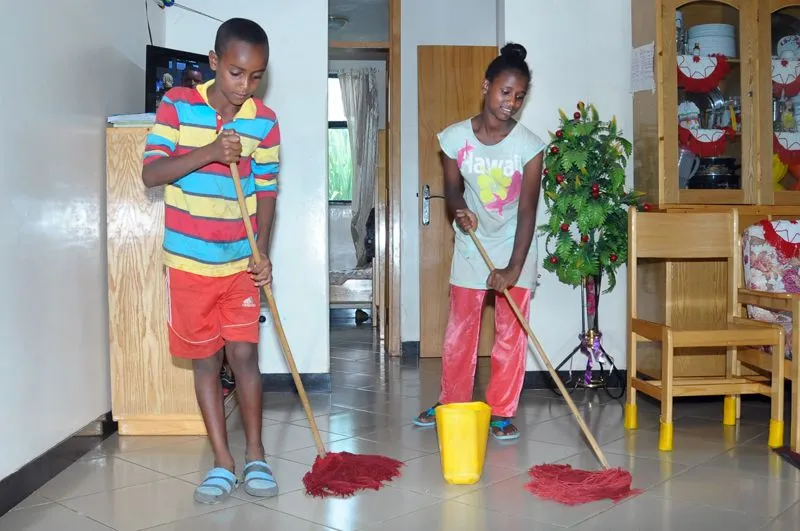
Gender equality conversations often take place at SOS Children’s Village, Jimma, in Ethiopia. Children aged nine and above are taught to celebrate the differences between boys and girls and to appreciate that both genders deserve equal rights, opportunities and respect. The SOS families hope to raise a generation free of the barriers created by societal stereotypes, so the children can be true to themselves and live to their fullest potential.
It is Monday evening, and children in SOS Children’s Village, Jimma, are gathered in their respective clubs. Keren*, the head of the Ministry of Sanitation and Development, is presenting her findings.
She reports to the members every two weeks.
“My ministry is all about cleanliness,” says Keren. “As the head, I supervise children’s personal hygiene twice a week. I also ensure that the environment within the Village and its surroundings is clean and that the plants, flowers and gardens are well cared for. Then I prepare a report on the outcome. Then, as a department, we raise awareness amongst the other children,” she says.
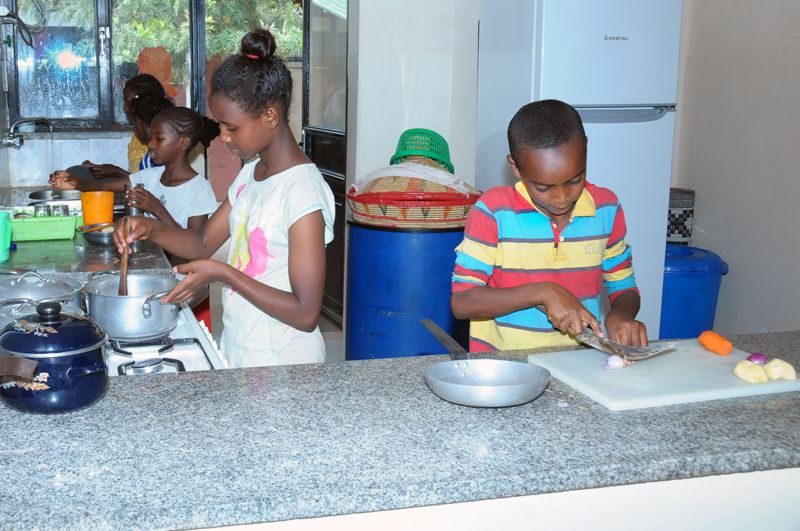
Keren, 10, is fortunate that at the SOS Children’s Village, girls are empowered to take on any role that interests them. Women in Ethiopia hardly take up leadership positions; it is usually reserved for men. In fact, women are poorly rated compared to men when it comes to literacy, health, economic opportunities, leadership and human rights. Traditional cultural beliefs enforce harmful practices like female genital mutilation and early child marriages. This denies girls the opportunity to participate actively in society.
The Gender Gap Index 2014 ranks Ethiopia 127th out of 142 countries in gender disparities.
Three boys were competing with Keren for the top job at the sanitation and development ministry, but she garnered more votes. Keren has been at the helm for the last seven months. Her term expires after two years.
“As a female leader, my strongest quality is self-confidence,” she says. “I am confident in my ability to lead and work with others. I am also transparent and open-minded. I freely talk to people without fear but without intimidating them. I let others express themselves, and I warmly welcome their opinions, suggestions and comments without any discrimination.”
“Girls are better leaders,” adds Keren. “If you take our children’s parliament, for example, there are six ministerial offices, four of which are led by girls. All of the girls are committed to their responsibilities, and the results of their efforts are visible. We discharge our duties, implement plans, and present reports in a more organized way than our counterparts,” she says.
To counter retrogressive gender mindsets early, SOS Children’s Villages established a gender club in 2015, where children aged 9 and above are taught to develop a healthy gender outlook. The club has 55 members (29 boys and 26 girls).
“The children are told openly about the existing stereotypes that make girls and women especially vulnerable to gender-based violence and discrimination. They are discouraged from conforming to the misconceptions,” says Mulualem Gurmessa, the Village Director.
Boys, however, argue that being male or female is natural and that it makes little sense to alter gender roles that have already been clearly defined by nature. For example, caring for children, boys wonder if this should be a common role.
“I am the father figure in the Village and therefore a role model to the boys,” says Gurmessa. “So I openly display my compassion and nurturing abilities towards children in the Village, and to my own two biological children, so the boys can observe that caring for their siblings in the home environment is manly.”
Girls, on their part, are encouraged to come out of their shells and take up positions traditionally reserved for boys or men. Consequently, girls like Keren, a third grader in the SOS Children's Villages School, can dream big.
“Being a leader gives me the opportunity to serve my people and develop my leadership potential,” she says. “I enjoy being a leader, and I hope to be the first female president in this country.”
No gender bias in SOS families
To eliminate gender bias at the household level, domestic work is not assigned based on gender. Aman*, 10, knows that being a boy does not exclude him from cleaning dishes, cooking, laundry, cleaning the house, making his bed, and gardening, among other chores.
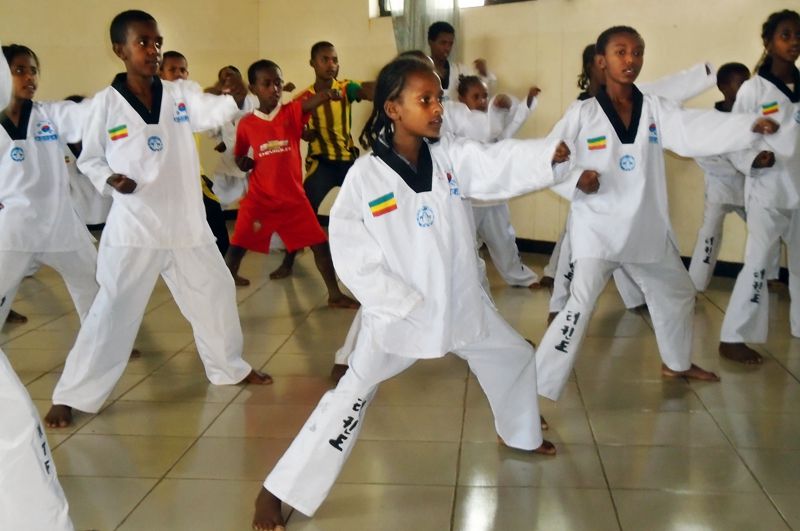
“I began supporting my SOS mother with household chores as soon as I joined the family,” he says. “I started with house cleaning, dish washing, and gardening. As I grew up, my responsibilities increased to cooking. I make coffee and ‘shiro’ (a kind of sauce made of ground and stewed pulses), both of which are traditionally regarded as female roles.”
“Family jobs help children to be responsible and to develop a sense of what work is. It is part of life skills training that is of great benefit in the future,” says Gudetu, Aman’s SOS mother. “Children do household chores throughout the week before and after school. Making their beds and arranging their clothes in their respective wardrobes are their everyday activities, whereas house cleaning and gardening are mainly done during weekends,” she says.
The children, however, need to be motivated to do their chores, so a chore chart neatly hangs on Gudetu’s bedroom door. The duties are tailored according to age.
In Ethiopia, gender roles are strictly defined – men are the family providers and do the heavy lifting outside the home, while women do the house chores and look after the children. Therefore, girls tend to receive more training in running the home, as they are expected to do so in their own homes.
“I believe that every human being is entitled to equal rights and opportunities, their gender notwithstanding,” says Mulualem Gurmessa, the Village Director. “Gender equality for me improves the efficiency of human capital in any given country. It is also a fact that women form half of the population in Ethiopia, so they need to be fully empowered for better development.”
“I think boys and girls are more alike than they are different,” says Aman. “That is why I consider housework a responsibility just like any other. I particularly like to make shiro, which is traditionally considered a female role. But I choose to see the knowledge of making this sauce as an important life skill that I will utilize in future.”
How you can help
Canadian's wishing to support SOS Children's Villages are encouraged to sponsor a child, sponsor a village or make a direct donation. Your support ensures that SOS Children's Villages can continue to provide a safe and loving home to orphan and abandoned children worldwide.
*Names changed to protect privacy.